Best Brain Tumour Surgeon in Kalyan and Dombivli
A brain tumour diagnosis can be overwhelming, and finding the best brain tumour surgeon in Kalyan and Dombivli is often the most important step toward effective treatment and recovery. Dr. Sagar Gawali, MBBS, MS (General Surgery), MCh (Neurosurgery), with a Fellowship in Cranial and Spinal Endoscopy from Saarland University, Germany, brings advanced international training and a compassionate, patient-centered approach to brain tumour care. As an Associate Professor at KJ Somaiya Hospital and Medical College, he combines surgical precision with ongoing academic and research contributions to the field of neurosurgery.
Understanding Brain Tumours
A brain tumour is an abnormal growth of cells within the brain or the structures surrounding it. Tumours can be benign (non-cancerous) or malignant (cancerous), and their impact depends largely on their size, location, and rate of growth. Even benign tumours can cause significant symptoms if they press on critical areas of the brain or block the normal flow of cerebrospinal fluid. Early diagnosis and treatment by an experienced specialist are essential for the best possible outcome.
Types of Brain Tumours Treated
Dr. Gawali manages a wide range of brain tumour types, including gliomas (such as astrocytomas and glioblastomas), meningiomas, pituitary adenomas, acoustic neuromas (vestibular schwannomas), craniopharyngiomas, colloid cysts, and metastatic brain tumours that have spread from cancers elsewhere in the body. Each type requires a different treatment approach based on its location, growth pattern, and relationship to surrounding brain structures and blood vessels. His training in cranial endoscopy allows certain tumours, particularly pituitary adenomas and colloid cysts, to be removed through minimally invasive endonasal or endoscopic approaches.
Causes and Risk Factors
The exact cause of most brain tumours remains unknown, but several factors have been associated with increased risk. Genetic conditions such as neurofibromatosis and certain hereditary syndromes can predispose individuals to developing tumours. Previous radiation exposure to the head, particularly during childhood treatment for other conditions, has been linked to certain tumour types later in life. Family history of brain tumours may also increase risk, though most cases occur without any clear hereditary link. Age is a significant factor, with certain tumour types being more common in children while others, like glioblastomas and meningiomas, are more frequently diagnosed in adults. Environmental factors continue to be studied, but no single lifestyle cause has been definitively established for most brain tumours.
Symptoms to Watch For
Brain tumour symptoms vary depending on the size and location of the growth, but common warning signs include persistent headaches that are often worse in the morning, nausea and vomiting unrelated to other causes, vision problems such as blurred or double vision, gradual or sudden weakness or numbness in the arms or legs, difficulty with balance or coordination, seizures with no prior history, changes in personality, memory, or cognitive function, and hormonal imbalances in the case of pituitary tumours. Since these symptoms can sometimes develop slowly, patients and families may not immediately associate them with a brain tumour, making it important to consult a specialist when symptoms persist or worsen.If you or a loved one are experiencing symptoms that may indicate a brain tumour, don't delay—early evaluation by the best brain tumour surgeon in Kalyan and Dombivli can make a meaningful difference in outcomes.
Advanced Treatment Approaches
Treatment for brain tumours is highly individualized, depending on the tumour's type, size, location, and the patient's overall health. Surgical removal remains the primary treatment for most accessible tumours, and Dr. Gawali's expertise spans both microsurgical and endoscopic techniques. For pituitary tumours and certain skull base lesions, endoscopic endonasal surgery allows removal through the nasal passage without any external incision, significantly reducing recovery time. For deep-seated tumours such as colloid cysts, neuroendoscopy provides a minimally invasive route that minimizes damage to surrounding brain tissue. When tumours are malignant or located in complex areas, surgery may be combined with radiotherapy or chemotherapy as part of a comprehensive treatment plan, often coordinated with oncology specialists.
Advanced Healthcare Support
Comprehensive brain tumour care requires more than surgical skill alone. Patients benefit from detailed pre-operative imaging using MRI and CT scans, which help map the tumour's exact location and its relationship to critical brain structures and blood vessels. Advanced endoscopic and microsurgical equipment ensures procedures are performed with maximum precision and minimal risk. Dr. Gawali's role in establishing structured neurosurgical protocols, including one of the first endoscopic spine programs in a BMC hospital, reflects his broader commitment to building advanced neurosurgical infrastructure accessible to patients across the region. This dedication to combining technology, training, and patient-centered care is what makes him a trusted choice for those seeking the best brain tumour surgeon in Kalyan and Dombivli.
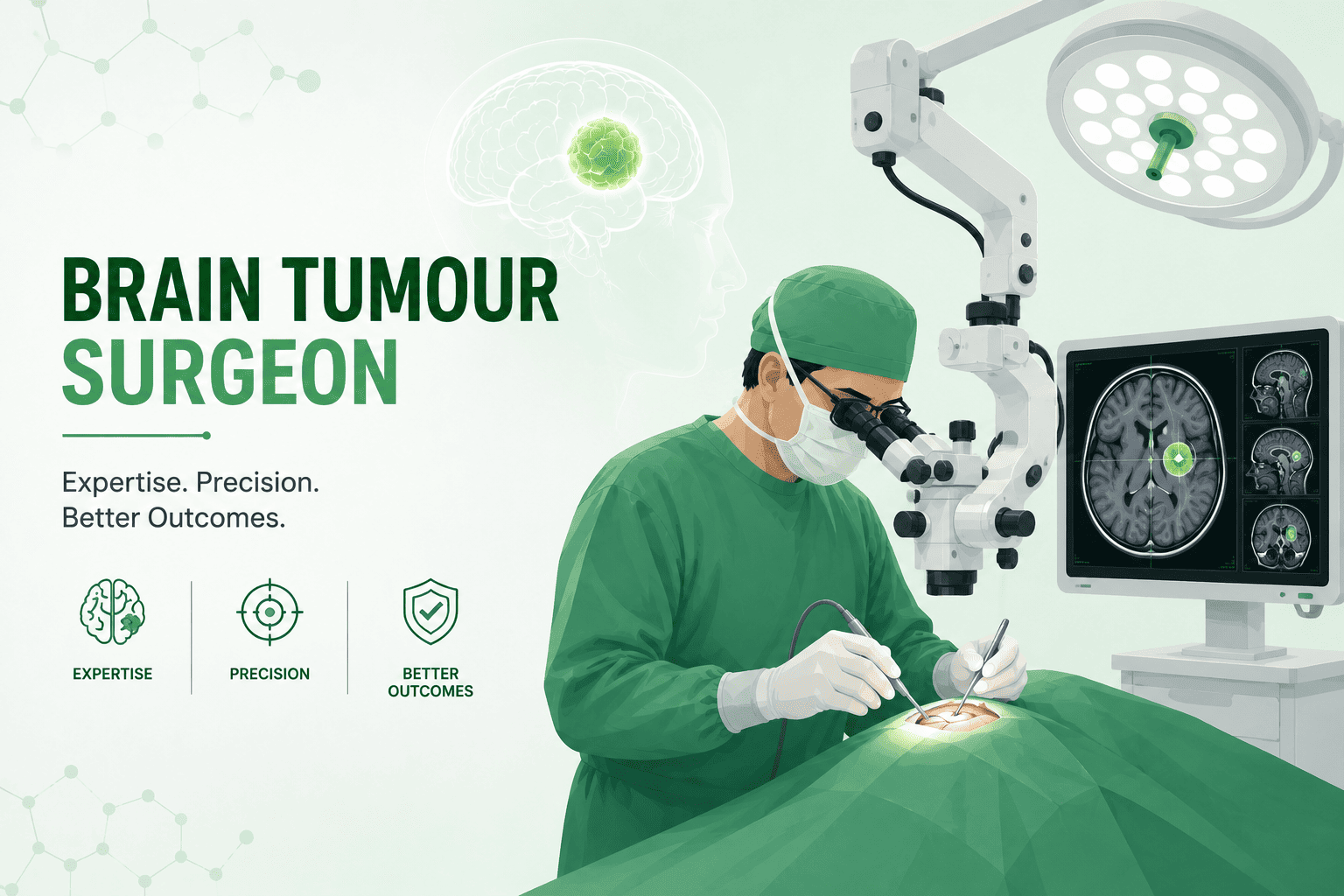
Post-Surgical Management and Recovery
Recovery after brain tumour surgery is managed through a carefully structured plan. This includes close post-operative monitoring to detect any early complications, pain management tailored to each patient's needs, and physiotherapy or rehabilitation programs for patients experiencing weakness or coordination difficulties. Regular follow-up imaging is used to monitor for tumour recurrence, particularly important for certain tumour types that have a tendency to regrow. For patients requiring additional treatment such as radiotherapy, coordination with oncology teams ensures a seamless continuation of care. Hormonal monitoring is also essential for patients who have undergone pituitary tumour surgery, as hormone levels may need adjustment during recovery.
Conclusion
A brain tumour diagnosis requires prompt attention from a skilled specialist who can offer both advanced surgical options and compassionate, ongoing care. With his strong academic foundation, specialized fellowship training from Germany, and continued contributions as an Associate Professor at KJ Somaiya Hospital and Medical College, Dr. Sagar Gawali offers patients in Kalyan, Dombivli, and surrounding areas access to the best brain tumour surgeon in Kalyan and Dombivli without the need to travel to distant metro hospitals. Whether the diagnosis involves a benign meningioma, a pituitary adenoma, or a more complex tumour, a timely consultation can provide clarity on diagnosis, treatment options, and the path toward recovery.
FAQs
What are the common symptoms of a brain tumour?
Common symptoms include persistent headaches, seizures, vision problems, balance difficulties, nausea, memory issues, weakness in the limbs, and changes in behavior or speech.
How is a brain tumour diagnosed?
Brain tumours are typically diagnosed using neurological examinations, MRI scans, CT scans, and other advanced imaging tests to determine the tumour's location and size.
Is brain tumour surgery safe?
Brain tumour surgery is generally safe when performed by an experienced neurosurgeon. Modern surgical techniques and advanced technology help improve precision and patient outcomes.
Brain Tumor Specialists
Treatment for patients with brain tumors is best developed by a team that includes tumor physicians from various medical specialties. Our brain tumor doctors include some of the best neurosurgeons, neuro-oncologists, radiation oncologists, pathologists and other specialists. We combine the latest imaging and monitoring methods to offer patients an unparalleled variety of treatment approaches. And our strong support staff assists patients and families in coping with these difficult diagnoses.
Above Short Content Reference Link : https://www.hopkinsmedicine.org/brain-tumor/team
Google Reviews

I had an excellent experience with Dr. Sagar Gawali. From the first consultation, he explained my condition clearly and patiently answered all my questions. His calm and confident approach immediately put me at ease. The surgery was handled with great expertise, and the recovery has been much smoother than I expected. The care and attention I received from him.
made a huge difference in my journey. I am deeply grateful and would highly recommend them to anyone in need of a neurosurgeon.
I am extremely grateful to Dr. Sagar Gawali Sir for successfully performing my brother’s brain surgery. From diagnosis to post-operative care, everything was handled with great professionalism and expertise. The doctor explained the condition clearly and gave us confidence during a very difficult time. Thanks to their skill and dedication, my brother is recovering well. Highly recommended.
Dr. Sagar carried out a burr hole surgery for my father. He is a composed and compassionate doctor who listens attentively and addresses even the most basic concerns with patience and respect. His calm nature instilled strong confidence in us while entrusting him with my father’s treatment. Highly recommended!
Dr. Sagar Gawali is a very experienced doctor. I am very satisfied with his treatment. Six months ago, my husband suffered a head injury in an accident, and the doctor treated him very well. He is very humble and has a down-to-earth personality. Thank you so much, doctor, you have given him a second life. 🙏🏻🙏🏻🙏🏻
Very good nuro surgeon in Kalyan city.
Very calm and generous approach towards patient.
Very good nuro surgeon in kalyan city.
And very experienced doctor.