Best Vascular Neurosurgeon in Kalyan and Dombivli
When dealing with conditions affecting the blood vessels of the brain and spinal cord, finding the best vascular neurosurgeon in Kalyan and Dombivli can be critical—often a matter of life and death. Dr. Sagar Gawali, MBBS, MS (General Surgery), MCh (Neurosurgery), with a Fellowship in Cranial and Spinal Endoscopy from Saarland University, Germany, brings a strong foundation in neurosurgical diagnosis and management to patients in this region. As an Associate Professor at KJ Somaiya Hospital and Medical College, he combines rigorous clinical training with hands-on experience in managing complex neurosurgical emergencies, including those involving the brain's vascular system.
Understanding Vascular Neurosurgery
Vascular neurosurgery focuses on conditions affecting the blood vessels supplying the brain and spinal cord. These conditions can range from slow, silent abnormalities discovered incidentally on imaging to sudden, life-threatening emergencies such as a ruptured aneurysm. Because the brain depends on a constant, well-regulated blood supply, any disruption—whether from a blockage, rupture, or abnormal vessel formation—can lead to serious neurological damage if not treated promptly and appropriately.
Types of Vascular Conditions Treated
A wide range of vascular conditions fall under neurosurgical care. These include cerebral aneurysms (weak, bulging areas in brain blood vessels), arteriovenous malformations (AVMs), which are abnormal tangles of blood vessels that can bleed unexpectedly, intracerebral hemorrhages caused by bleeding within the brain tissue itself, subarachnoid hemorrhages resulting from bleeding around the brain, cavernous malformations, and spinal vascular malformations affecting the spinal cord. Each of these conditions requires careful evaluation to determine whether surgical intervention, minimally invasive treatment, or close observation is the most appropriate course of action.
Causes of Vascular Brain and Spine Conditions
Several factors contribute to the development of vascular neurosurgical conditions. High blood pressure (hypertension) is one of the most significant risk factors, as it places ongoing strain on blood vessel walls and can lead to weakening or rupture over time. Congenital factors play a major role in conditions like aneurysms and AVMs, which may be present from birth and remain undetected until they cause symptoms or rupture. Smoking, excessive alcohol consumption, and uncontrolled diabetes can all contribute to vessel wall damage and increase the risk of hemorrhagic events. Trauma to the head or spine can also cause vascular injuries, leading to bleeding or abnormal vessel formation. In some cases, genetic conditions and connective tissue disorders increase susceptibility to vascular abnormalities in the brain and spine.
Symptoms That Require Urgent Attention
Vascular neurosurgical conditions can present with sudden, severe symptoms or, in some cases, develop more gradually. Warning signs include a sudden, severe headache often described as the worst headache of one's life, sudden weakness or numbness on one side of the body, difficulty speaking or understanding speech, sudden vision changes or loss of vision, loss of consciousness or confusion, seizures with no prior history, and stiffness in the neck accompanied by sensitivity to light. Because conditions like ruptured aneurysms or hemorrhages can progress rapidly, anyone experiencing these symptoms should seek emergency medical attention immediately rather than waiting for a routine consultation. If you or a loved one experience sudden neurological symptoms or have been told you have a vascular abnormality on imaging, timely consultation with the best vascular neurosurgeon in Kalyan and Dombivli can be an important step toward understanding your condition and the safest path forward.
Advanced Treatment Approaches
Treatment for vascular neurosurgical conditions depends heavily on the type, size, and location of the abnormality, as well as whether it has already caused bleeding. For ruptured aneurysms or hemorrhages, emergency surgical intervention is often required to control bleeding and relieve pressure on the brain. Surgical clipping involves placing a small clip at the base of an aneurysm to prevent blood flow into it, while AVMs may require surgical removal, depending on their size and location. For certain unruptured aneurysms or smaller AVMs, careful monitoring with regular imaging may be recommended if the risks of intervention outweigh the risks of the condition itself. Dr. Gawali's broad neurosurgical training allows him to assess each case individually and determine the safest, most effective approach for the patient.
Advanced Healthcare Support
Effective management of vascular neurosurgical conditions depends on rapid, accurate diagnosis and access to advanced imaging technology. CT angiography and MRI are essential tools for identifying aneurysms, AVMs, and areas of bleeding within the brain or spine. Timely access to a neurosurgical team capable of responding to emergencies is equally important, as outcomes in conditions like ruptured aneurysms are heavily influenced by how quickly treatment is initiated. Dr. Gawali's experience working within a major teaching hospital environment, combined with his contributions to building advanced neurosurgical programs, means patients in Kalyan and Dombivli have access to a level of preparedness and expertise that supports better outcomes in these high-stakes situations. This is a key reason patients consider him among the best vascular neurosurgeon in Kalyan and Dombivli options available locally.
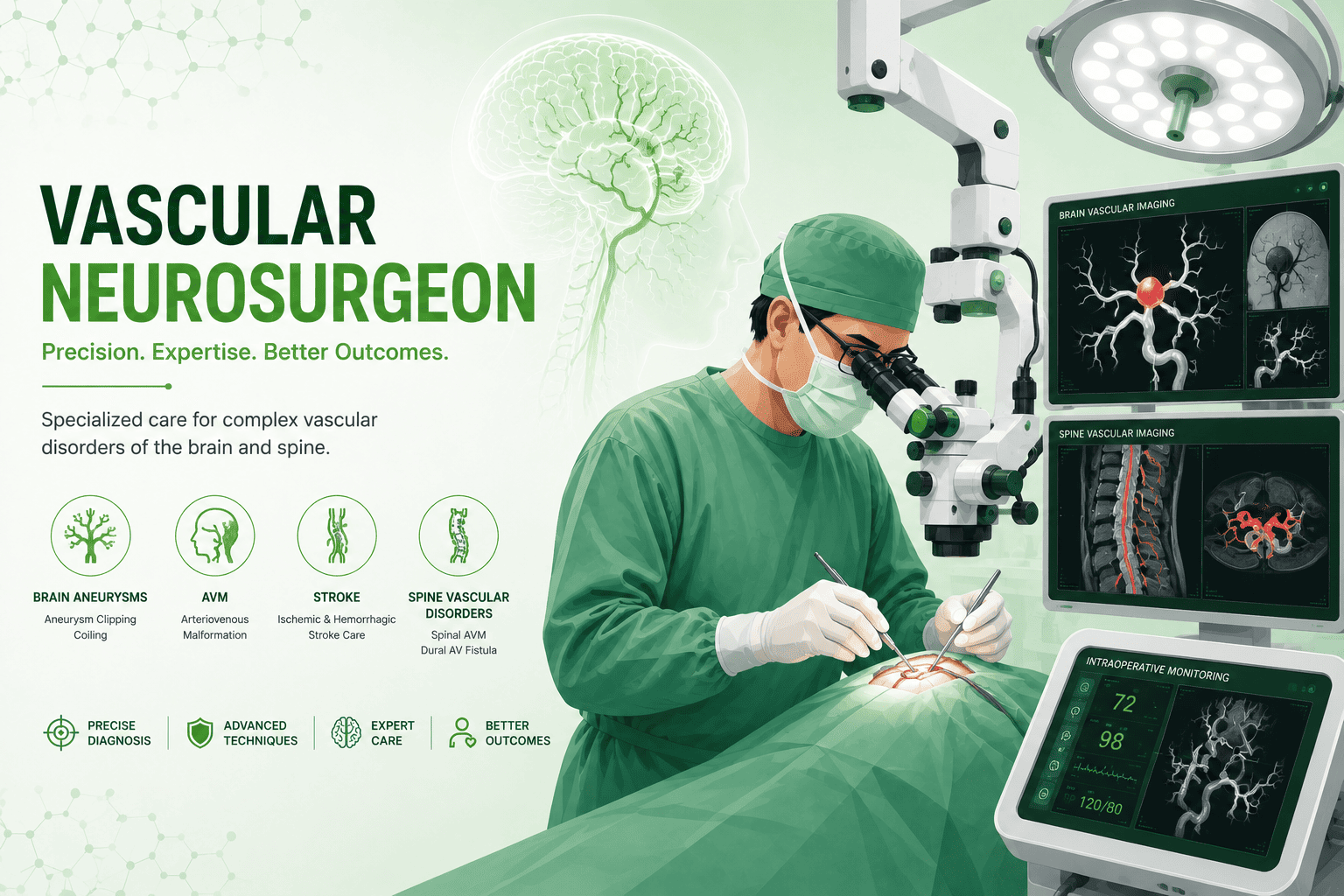
Post-Treatment Management and Recovery
Recovery from vascular neurosurgical conditions varies significantly depending on the severity of the initial event. For patients who have experienced a hemorrhage, recovery often involves intensive monitoring in the initial days, followed by rehabilitation to address any resulting weakness, speech difficulties, or cognitive changes. Physiotherapy, occupational therapy, and speech therapy may all play a role depending on the areas of the brain affected. Long-term management includes controlling underlying risk factors such as blood pressure, blood sugar, and cholesterol levels to reduce the risk of future events. Regular follow-up imaging is also important for patients with treated aneurysms or AVMs to ensure the abnormality remains stable or fully resolved.
Conclusion
Vascular conditions affecting the brain and spine require prompt recognition, accurate diagnosis, and access to a neurosurgeon capable of managing both emergency and elective cases. With his comprehensive training across general surgery and neurosurgery, specialized fellowship experience from Germany, and ongoing academic role at KJ Somaiya Hospital and Medical College, Dr. Sagar Gawali offers patients in Kalyan, Dombivli, and surrounding areas access to the best vascular neurosurgeon in Kalyan and Dombivli for both routine evaluation and urgent care.
FAQs
What conditions does a vascular neurosurgeon treat?
A vascular neurosurgeon treats brain aneurysms, AVMs, cavernomas, brain hemorrhages, stroke-related complications, and other disorders affecting the blood vessels of the brain and spinal cord.
What are the symptoms of a brain aneurysm or vascular brain disorder?
Common symptoms may include severe headaches, sudden weakness, vision changes, difficulty speaking, seizures, dizziness, loss of balance, or stroke-like symptoms. Immediate medical attention is important if these symptoms occur.
How are vascular neurological conditions diagnosed?
Diagnosis may involve MRI scans, CT scans, cerebral angiography, MR angiography (MRA), CT angiography (CTA), and detailed neurological examinations to identify abnormalities in brain blood vessels.
Vascular dementia
Dementia is a loss of brain function that occurs with certain diseases. It affects one or more brain functions such as memory, thinking, language, judgment, or behavior.
Above Short Content Reference Link : https://medlineplus.gov/ency/article/000746.htm
Google Reviews

I had an excellent experience with Dr. Sagar Gawali. From the first consultation, he explained my condition clearly and patiently answered all my questions. His calm and confident approach immediately put me at ease. The surgery was handled with great expertise, and the recovery has been much smoother than I expected. The care and attention I received from him.
made a huge difference in my journey. I am deeply grateful and would highly recommend them to anyone in need of a neurosurgeon.
I am extremely grateful to Dr. Sagar Gawali Sir for successfully performing my brother’s brain surgery. From diagnosis to post-operative care, everything was handled with great professionalism and expertise. The doctor explained the condition clearly and gave us confidence during a very difficult time. Thanks to their skill and dedication, my brother is recovering well. Highly recommended.
Dr. Sagar carried out a burr hole surgery for my father. He is a composed and compassionate doctor who listens attentively and addresses even the most basic concerns with patience and respect. His calm nature instilled strong confidence in us while entrusting him with my father’s treatment. Highly recommended!
Dr. Sagar Gawali is a very experienced doctor. I am very satisfied with his treatment. Six months ago, my husband suffered a head injury in an accident, and the doctor treated him very well. He is very humble and has a down-to-earth personality. Thank you so much, doctor, you have given him a second life. 🙏🏻🙏🏻🙏🏻
Very good nuro surgeon in Kalyan city.
Very calm and generous approach towards patient.
Very good nuro surgeon in kalyan city.
And very experienced doctor.